Three Mechanisms That Turn Goals into Performance
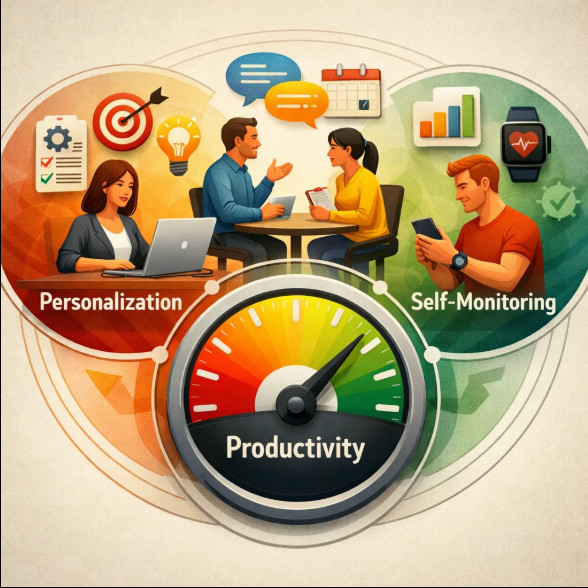
- Productivity stabilizes when personalization, check-ins, and self-monitoring come together
Goal setting may look like the oldest prescription for improving productivity. But what truly matters is not how high a goal is, but whether it changes weekly behavior. A literature review that combined 29 studies organized three mechanisms that repeatedly appear when goals translate into performance.
Goals That Turn into Posters
Goal setting is so familiar that it is easy to use it incorrectly. If goals are set high, it may seem like people will ignite with motivation, but in reality they can become exhausted and their field of view can narrow. If goals are set low, people may feel comfortable, but growth can slow as well. That is why goals are not about hype, but about design. Especially in knowledge work, outputs are not visible at a glance. Because the process is long and there are many intermediate deliverables, such as reports, plans, code, analysis, and negotiation, goals serve as a map that helps organize work. But if that map is off, it cannot take people farther and instead makes them wander.
This is also why OKR-type systems often fail even when they are introduced. If there are too many goals, the goals are abstract, and check-ins are merely formalities, goals create anxiety rather than motivation. If goals exist only as a demand to do something, without showing how to do it, people increase reporting that explains the goals rather than moving toward the goals. Then goals become documents that make work more complicated, not mechanisms that generate performance. In the end, the important question is not whether goals exist, but what kind of goals run in what way.
Common Patterns Indicated by 29 Studies
A research team at the University of Duisburg-Essen in Germany systematically reviewed 29 studies published from 1976 to 2024 and organized how goal setting connects to individual productivity in knowledge work. This literature review also examined how goal setting relates not only to performance but also to motivation, job satisfaction, and self-monitoring, and it classified the contexts, data types, and practical application characteristics of the studies to build a structure for the conditions under which effects appear more stably.
The advantage of combining multiple studies is that it captures repeating patterns rather than the unique culture of a particular company. At the same time, it can emphasize operating conditions rather than concluding effects with a single number. Because definitions and measurement methods for productivity can differ across studies, in many cases it is more accurate to conclude under what conditions it operates stably than to claim it increases by a certain percentage. Goal setting is not a universal remedy, but an operating skill that produces effects when conditions are in place.
Three Mechanisms Turn Goals into an Engine
The literature review repeatedly emphasized three effect factors. The first is personalized goals. Goals do not work simply because the sentences look impressive; they must connect to actions the person can actually take. Even within the same team, the form of goals must differ when roles, capabilities, and the nature of work differ. In sales, meetings, proposals, and contract stages are likely to become goals, while in development, completion of feature units and quality signals are likely to become goals. In planning, exploratory activities such as validating user hypotheses or conducting research can become goals. Personalization does not mean lowering goals; it means aligning goals so they connect to the person’s real work context. When goals are aligned, the feasibility of execution increases.
The second is continuous goal check-ins. If goals appear only at the end of the month, they easily become posters. They remain in documents but fail to change everyday choices. By contrast, if goals are checked weekly or biweekly, goals maintain the function of setting direction. What matters is not that check-ins become longer, but that check-ins become lighter. If check-ins repeat even briefly, such as a 15-minute weekly check-in, goals become not year-end evaluation sentences but the 기준 for this week’s choices.
As goal check-ins happen more often, goals become connected to reality, and as they become connected to reality, goals turn into tools rather than sources of fear.
The third is self-monitoring. Goals tracked by a supervisor can feel like surveillance. Then people increase safe reporting rather than producing performance. But if a habit forms of recording and adjusting progress on one’s own, the gap between goals and execution narrows. Self-monitoring is not grand reflection. It is enough to briefly write down what was done today, what was blocked, and what will be changed next. This kind of 기록 helps organize one’s own flow. When self-monitoring is in place, goals shift from external pressure to internal guidance.
If even one of the three mechanisms is missing, goals become unstable. Without personalization, goals float as abstractions; without check-ins, goals are forgotten; without self-monitoring, goals become surveillance. By contrast, when personalization, check-ins, and self-monitoring are designed together, goals gain the power to slightly change daily behavior.
The Backfire Caused by Overly Difficult Goals
The literature review also presented clear warnings. Excessively difficult goals can harm motivation and perceived performance. This is less about a lack of willpower and more about limits in mental processing capacity. Overly difficult goals can increase anxiety and avoidance rather than creating focus. People end up looking for excuses to avoid the goals rather than running toward the goals. That is why the difficulty of goals is not a matter of willpower but a matter of calibrating difficulty.
A common scenario in which goals fail in practice is when goals are too big and too far away. For example, a goal like revenue growth points in the right direction but does not tell what to do today. What is needed then is to break the goal into intermediate steps. There must be intermediate goals such as what to change this week, what hypotheses to test, which customers to meet, and which metrics to check. When broken down into a size that can actually move, goals become actions rather than burdens.
Operating Rules You Can Use Immediately in Practice
Practical application is not grand. Align goals to the individual’s work context, check them weekly, and leave self-monitoring as a routine. The most effective method is to translate goals into actions. An observable action goal such as conducting two customer interviews this week holds execution more tightly than an abstract goal. Action goals leave learning even when they are not achieved, and when learning remains, next week’s goals are refined more realistically.
A criterion for reducing goals is also necessary. If there are too many goals, people stop because they do not know where to start. It is better to boldly postpone goals that are hard to answer with the question, if we do not do this goal, will the next step truly be blocked. When goals are reduced, check-ins become easier, and when check-ins become easier, execution takes hold.
Check-ins must be feedback, not surveillance. If check-ins operate as punishment, safe reporting increases and difficult attempts disappear. By contrast, if check-ins operate as a time for adjustment and learning, the texture of productivity changes even under the same goals. A check-in does not need to be long if three things are organized: what the blocked point is, what the next action will be changed to, and what help is needed. The more brief check-ins repeat, the more goals operate as execution standards rather than documents.
The most stable path by which goal setting improves productivity is to design personalization, check-ins, and self-monitoring together so that goals slightly change daily behavior. Goals are not sentences that push people; they are a bundle of small mechanisms for making work run well. When those mechanisms mesh, goals become not posters but engines.
Reference
Schkolski, Alexandar. (2025). The influence of goal setting on the personal productivity of knowledge workers: a systematic literature review. International Journal of Productivity and Performance Management
목표가 성과로 이어지는 세 가지 장치
- 개인화 점검 자기점검이 합쳐질 때 생산성이 안정된다
목표 설정은 생산성을 올리는 가장 오래된 처방처럼 보인다. 하지만 정말 중요한 건 목표의 높이가 아니라, 목표가 매주의 행동을 바꾸는지다. 29편의 연구를 묶어 살펴본 문헌고찰은 목표가 성과로 이어질 때 반복적으로 등장하는 세 가지 장치를 정리해냈다.
포스터가 되는 목표
목표 설정은 너무 익숙해서 오히려 잘못 쓰이기 쉽다. 목표를 높게 잡으면 사람이 불타오를 것 같지만, 실제로는 지치고 시야가 좁아질 수 있다. 반대로 목표를 낮게 잡으면 마음은 편해지지만 성장 속도도 느려질 수 있다. 그래서 목표는 기합이 아니라 설계다. 특히 지식노동에서는 결과물이 한눈에 보이지 않는다. 보고서나 기획안, 코드, 분석, 협상처럼 과정이 길고 중간 산출이 많다. 이런 일에서는 목표가 일을 정리해주는 지도 역할을 한다. 하지만 그 지도가 엉뚱하면 사람을 더 멀리 데려가지 못하고 헤매게 만든다.
OKR 같은 제도를 도입해도 실패가 잦은 이유도 여기에 있다. 목표가 많고 추상적이며 점검이 형식적이면 목표는 동기를 주기보다 불안을 준다. 목표가 하라는 말로만 존재하고 어떻게 할지가 없으면, 사람은 목표를 향해 움직이기보다 목표를 설명하는 보고를 늘리게 된다. 그러면 목표는 성과를 끌어내는 장치가 아니라, 일을 더 복잡하게 만드는 문서가 된다. 결국 중요한 질문은 목표가 있느냐 없느냐가 아니라, 어떤 목표가 어떤 방식으로 굴러가느냐다.
29편이 가리킨 공통 패턴
독일 뒤스부르크 에센 대학교 연구진은 1976년부터 2024년까지 발표된 29편의 연구를 체계적으로 검토해 목표 설정이 지식노동 개인 생산성과 어떻게 연결되는지 정리했다. 이 문헌고찰은 목표 설정이 성과만이 아니라 동기, 직무 만족, 자기점검과 어떤 관계를 갖는지도 함께 다뤘고, 연구가 다룬 맥락과 데이터 유형, 실무 적용 성격을 분류해 어떤 조건에서 효과가 더 안정적으로 나타나는지 구조를 세웠다.
여러 연구를 묶는 방식의 장점은 특정 기업의 특수한 문화가 아니라 반복되는 패턴을 잡는 데 있다. 동시에 단일 숫자로 효과를 단정하기보다 작동 조건을 강조할 수 있다. 생산성의 정의나 측정 방식은 연구마다 다를 수 있기 때문에, 몇 퍼센트 오른다보다 어떤 조건에서 안정적으로 작동한다가 더 정확한 결론이 될 때가 많다. 목표 설정은 만능 처방이 아니라, 조건이 갖춰질 때 효과를 내는 운영 기술이기 때문이다.
세 가지 장치가 목표를 엔진으로 만든다
문헌고찰이 반복적으로 강조한 효과 요인은 세 가지다. 첫째 개인화된 목표다. 목표는 문장 자체가 멋있으면 되는 것이 아니라, 그 사람이 실제로 할 수 있는 행동과 연결돼야 한다. 같은 팀이라도 역할과 역량과 업무의 성격이 다르면 목표의 형태가 달라져야 한다. 영업은 미팅과 제안서와 계약 단계가 목표가 되기 쉽고, 개발은 기능 단위의 완료와 품질 신호가 목표가 되기 쉽다. 기획은 사용자 가설 검증이나 리서치 같은 탐색 활동이 목표가 될 수 있다. 개인화는 목표를 낮추자는 말이 아니라, 목표가 그 사람의 실제 업무 맥락과 연결되도록 맞추자는 말이다. 목표가 맞춰지면 실행 가능성이 올라간다.
둘째 지속적인 목표 점검이다. 목표가 월말에만 등장하면 포스터가 되기 쉽다. 문서에는 남아 있지만, 일상적인 선택을 바꾸지 못한다. 반대로 주간 또는 격주 단위로 목표를 확인하면 목표는 방향을 잡아주는 기능을 유지한다. 중요한 것은 점검 시간이 길어지는 것이 아니라, 점검이 가벼워지는 것이다. 주간 15분 점검처럼 짧게라도 반복되면 목표는 연말 평가용 문장이 아니라 이번 주 선택의 기준이 된다. 목표 점검이 자주 이루어질수록 목표는 현실과 연결되고, 현실과 연결될수록 목표는 두려움이 아니라 도구가 된다.
셋째 자기점검이다. 상사가 추적하는 목표는 감시처럼 느껴질 수 있다. 그러면 사람은 성과를 내기보다 안전한 보고를 늘린다. 반면 스스로 진행을 기록하고 조정하는 습관이 붙으면 목표와 실행 사이의 간격이 줄어든다. 자기점검은 거창한 성찰이 아니다. 오늘 무엇을 했는지, 무엇이 막혔는지, 다음에는 무엇을 바꿀지, 이 세 가지를 짧게 남기는 수준이면 충분하다. 이런 기록은 스스로 흐름을 정리하게 해준다. 자기점검이 붙으면 목표는 외부의 압박이 아니라 내부의 안내로 바뀐다.
세 장치가 하나라도 빠지면 목표는 흔들린다. 개인화가 없으면 목표는 추상으로 떠 있고, 점검이 없으면 목표는 잊히며, 자기점검이 없으면 목표는 감시가 된다. 반대로 개인화 점검 자기점검이 함께 설계되면 목표는 매일의 행동을 조금씩 바꾸는 힘을 갖는다.
너무 어려운 목표가 만드는 역효과
문헌고찰은 경고도 분명히 제시한다. 지나치게 어려운 목표는 동기와 인지된 성과를 해칠 수 있다. 이는 의욕이 부족해서가 아니라 머릿속 처리 여력의 문제에 가깝다. 너무 어려운 목표는 집중을 만드는 대신 불안과 회피를 키울 수 있다. 사람은 목표를 향해 달리기보다 목표를 피하기 위해 핑계를 찾게 된다. 그래서 목표의 난이도는 정신력의 문제가 아니라 난이도를 맞추는 작업, 다시 말해 캘리브레이션의 문제다.
실무에서 목표가 실패하는 흔한 장면은 목표가 너무 크고 멀리 있을 때다. 예를 들어 매출 성장 같은 목표는 방향은 맞지만 오늘 무엇을 해야 하는지까지는 말해주지 않는다. 이때 필요한 것은 목표를 중간 단계로 쪼개는 일이다. 이번 주에 무엇을 바꿀 것인지, 어떤 가설을 검증할 것인지, 어떤 고객을 만나고 어떤 지표를 확인할 것인지 같은 중간 목표가 있어야 한다. 딱 움직일 수 있는 크기로 쪼개면 목표는 부담이 아니라 행동이 된다.
실무에서 바로 쓰는 운영 규칙
실무 적용은 거창하지 않다. 목표를 개인의 업무 맥락에 맞게 조정하고, 주간 단위로 점검하며, 자기점검을 루틴으로 남기면 된다. 가장 효과적인 방법은 목표를 행동으로 번역하는 것이다. 이번 주 고객 인터뷰 두 번 같은 관찰 가능한 행동 목표는 추상적 목표보다 실행을 붙잡는다. 행동 목표는 실패해도 학습이 남고, 학습이 남으면 다음 주의 목표가 더 현실적으로 다듬어진다.
목표를 줄이는 기준도 필요하다. 목표가 너무 많으면 사람은 무엇부터 해야 할지 몰라 멈춘다. 지금 이 목표를 하지 않으면 다음 단계가 정말로 막히는가, 이 질문에 답하기 어려운 목표는 과감히 미루는 편이 낫다. 목표를 줄이면 점검이 쉬워지고, 점검이 쉬워지면 실행이 붙는다.
점검은 감시가 아니라 피드백이어야 한다. 점검이 처벌로 작동하면 안전한 보고가 늘고 어려운 시도는 사라진다. 반대로 점검이 조정과 학습의 시간으로 작동하면 같은 목표도 생산성의 질감이 달라진다. 막힌 지점이 무엇인지, 다음 행동을 무엇으로 바꿀지, 어떤 도움이 필요한지, 이 세 가지가 정리되면 점검은 길 필요가 없다. 짧은 점검이 반복될수록 목표는 문서가 아니라 실행의 기준으로 작동한다.
목표 설정이 생산성을 올리는 가장 안정적인 길은 개인화 점검 자기점검을 함께 설계해 목표가 매일의 행동을 조금씩 바꾸게 만드는 것이다. 목표는 사람을 몰아붙이는 문장이 아니라, 일을 잘 굴리기 위한 작은 장치들의 묶음이다. 그 장치들이 맞물릴 때 목표는 포스터가 아니라 엔진이 된다.
Reference
Schkolski, Alexandar. (2025). The influence of goal setting on the personal productivity of knowledge workers: a systematic literature review. International Journal of Productivity and Performance Management.