Electricity Now Stores “Time”
- The New Order of the Power Grid Shaped by Batteries and Long-Duration Storage
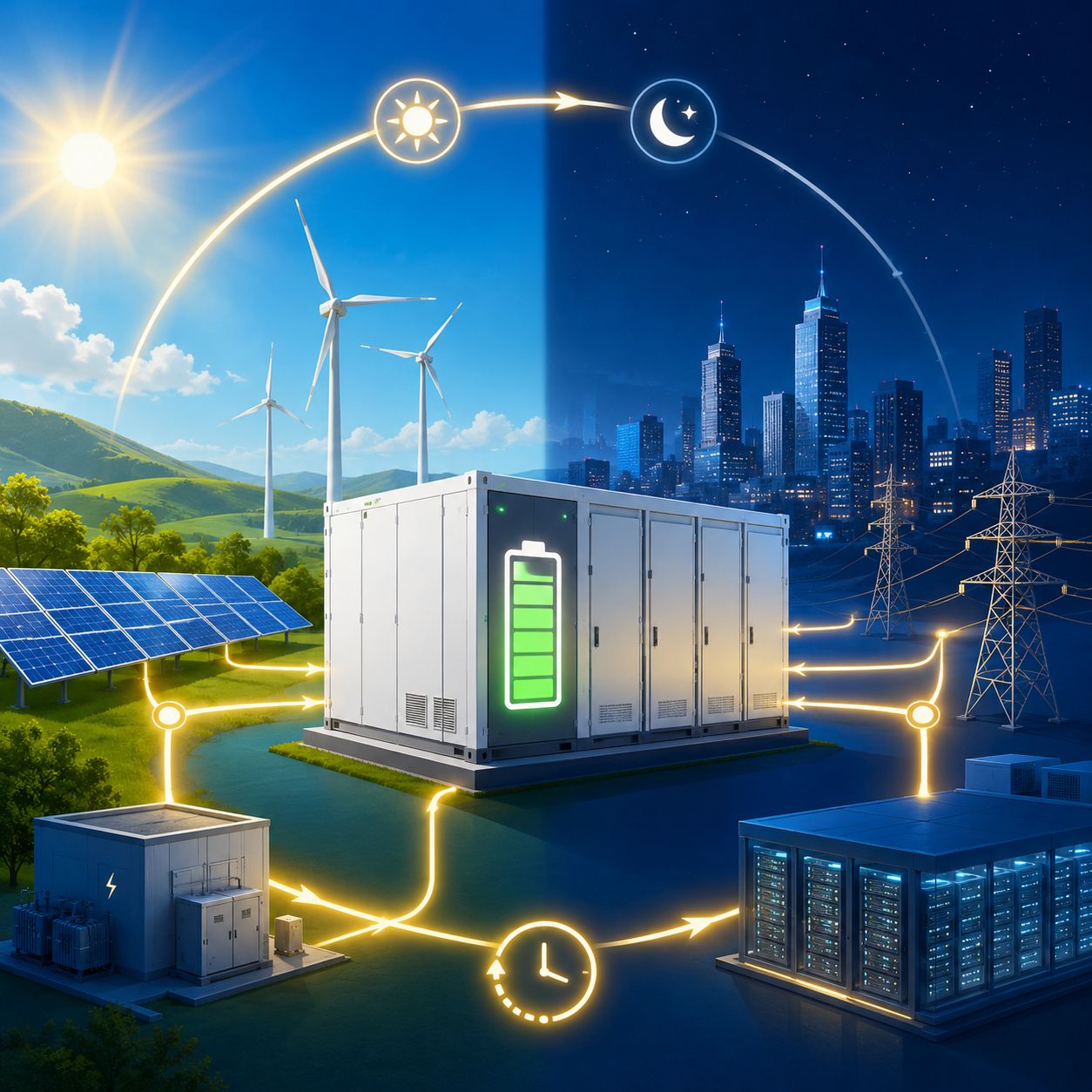
Electricity was long considered an energy source that had to be used the moment it was produced. But as batteries and long-duration storage technologies spread, electricity is changing from an “instant commodity” into an “asset that can move time.” From the variability of solar and wind power to peak demand, the surging electricity needs of data centers, and energy security, storage technology is becoming a core infrastructure of the future power grid.
[Key Message]
* The future of electricity is shifting from “how much can be produced” to “when it can be stored and used.” Electricity is no longer limited to an energy source that must be consumed the moment it is generated. Batteries and long-duration storage technologies move surplus electricity to the time when it is needed, giving the power grid the ability to manage time.
* Batteries are becoming core shock absorbers that reduce peak pressure on the power grid. By charging when demand is low and discharging when demand surges, batteries reduce the need for additional power plants and improve grid stability. They are especially important for responding to summer cooling peaks and evening electricity demand.
* Storage technology complements the weaknesses of renewable energy by absorbing the variability of solar and wind power. Solar power fluctuates between day and night, while wind power changes with weather conditions. Storage technology stores this irregular electricity and supplies it when needed, turning renewable energy into a more reliable power source.
* The rising electricity demand from artificial intelligence and data centers is making storage technology even more essential. Data centers require enormous amounts of stable electricity around the clock. Storage technology is becoming essential infrastructure for backup power, peak response, renewable energy integration, and electricity cost management.
* Storage technology is becoming a new standard for future energy security and industrial competitiveness. Energy security can no longer be explained only by oil and gas supply. The ability to store and distribute electricity reliably will become a core condition for national competitiveness, industrial attraction, and power grid resilience.
***
From the Age of Generation to the Age of Storage
For a long time, power grids were designed around the question of “how much electricity can be produced.” Coal-fired power, gas-fired power, nuclear power, and hydropower were all evaluated by their ability to generate electricity reliably. When industries expanded and cities grew, larger power plants were built. When electricity demand increased, transmission networks were extended farther and made stronger. The basic logic of the power system was simple: produce as much electricity as needed at the moment it is needed, and send it immediately to the place of consumption.
Yet the greatest characteristic of electricity was hidden inside this apparent simplicity. Electricity is difficult to store in tanks like oil or pile up in warehouses like coal. Production and consumption must be matched almost simultaneously. If demand suddenly rises and supply cannot keep up, the grid frequency becomes unstable, and in severe cases blackouts occur. The opposite is also a problem. If too much electricity is produced, and the grid cannot absorb it, power generation must be curtailed or electricity must be wasted. The power grid has always been a massive real-time system operating on a delicate balance.
This balance has become more complicated as renewable energy has expanded. Solar power generates electricity heavily during the day but stops at night. Wind power is strong when the wind blows, but output falls when the wind weakens. Electricity demand is determined by people. But renewable energy supply is shaped by weather and time. The old power grid was accustomed to a system in which power plants adjusted output according to demand. But as solar and wind power grow, the grid must adapt to a situation in which supply itself fluctuates. This is where storage technology enters.
Storage technology gives the power grid the ability to adjust time. Solar electricity that remains unused during the day can be stored and used during the evening peak. Electricity generated when the wind is strong can be stored and supplied when the wind stops. Storing electricity when there is a surplus and releasing it when there is a shortage may sound simple, but within the entire power system it is a revolutionary change. Electricity is no longer energy that disappears the moment it is produced. Once storage technology is attached, electricity becomes a resource that can move across time.
The International Energy Agency evaluates battery storage as one of the fastest-growing clean energy technologies in the power sector. As renewable energy expands rapidly around the world, storage technology is emerging not as a mere supporting device but as a core flexibility resource for the power grid. Since renewable energy capacity is expected to grow on a large scale from 2025 to 2030, the importance of storage technology can only increase further.
The essence of this change lies not in the size of power plants, but in the transformation of electricity’s timetable. In the past, power plants were the main actors of the grid. In the future, power plants, storage facilities, demand management, transmission networks, data centers, electric vehicles, and home batteries will be connected as a single network. As important as the ability to produce electricity will be the ability to decide when electricity should be used, when it should be stored, and when it should be released. The future of electricity is moving from a competition over production volume to a competition over the ability to coordinate time.
Batteries That Shave the Peak
The most expensive time in a power grid is the time when electricity use reaches its highest point. A typical example is the afternoon during the height of a summer heat wave, when cooling demand surges. Winter evenings during severe cold waves are no different. Electric utilities must maintain reserve power plants in preparation for such peak demand. The problem is that these plants are not needed continuously throughout the year. In many cases, massive facilities must be built just to endure a few days or even a few hours of peak demand.
Battery storage systems change this structure. They charge when electricity demand is low and electricity is relatively cheap, then discharge when demand spikes. This lowers the highest point that the grid must withstand. This is called peak reduction. When the peak is lowered, fewer new power plants are needed, and pressure on transmission networks also decreases. Grid operators can balance supply and demand more reliably, and consumers may face less long-term volatility in electricity prices.
The advantage of batteries is speed. Thermal power plants take time to increase or reduce output. Nuclear power is strong as a stable baseload source, but it has limits in responding instantly to sudden shifts in demand. Batteries, however, can control charging and discharging very quickly. They can also respond immediately when grid frequency becomes unstable and help restore balance. That is why batteries are not merely warehouses for storing electricity. They are closer to shock absorbers for the power grid.
This function becomes even more meaningful when combined with the expansion of renewable energy. In regions with abundant solar power, electricity pours into the grid at once during daytime hours. On a clear spring day, electricity demand may not be very high while solar output is strong. If that electricity cannot be stored, generation must be curtailed. By contrast, in the evening, solar output drops sharply just as people return home and use lights, heating and cooling, and home appliances at the same time. This creates the so-called evening peak. Batteries fill this gap by moving surplus daytime electricity into the evening.
Battery storage matters because it changes the operating philosophy of the grid. In the past, the central approach was to increase supply capacity to match the peak. In the future, reducing the peak itself will become more important. Building more is not the only solution. The solution is to arrange already produced electricity more intelligently. This changes the direction of power infrastructure investment. Instead of building one more power plant, it becomes possible to lower overall system costs by combining batteries, demand response, distributed energy resources, and electricity price signals.
This is why large-scale battery storage projects are growing rapidly in the United States, China, Europe, Australia, and elsewhere. In China, the average duration of new energy storage facilities is becoming longer, and in regions with high solar power penetration such as California, four-hour batteries have become important resources for grid operation. Storage duration is still often measured in a few hours, but those few hours change the most expensive time slots in the power grid. In a grid, a few hours in a day can determine the entire cost structure. Batteries target precisely those hours.
The Power of Storage That Complements the Weaknesses of Solar and Wind
Renewable energy has become cheaper and faster to deploy. The price of solar panels has fallen sharply over the long term, and wind power has become an important source of electricity in many regions. But renewable energy has an unavoidable weakness. Sunlight and wind are not switches that people can turn on and off. Just because electricity demand is high does not mean the sun shines more strongly. Just because an industrial complex is busy does not mean the wind blows harder. The weakness of renewable energy lies less in cost than in time.
Storage technology directly addresses this weakness. The core problem of solar power is the gap between day and night. The core problem of wind power is the variability of wind. Storage technology absorbs this variability and converts it into a form the grid can handle more easily. Electricity left over during the day is stored and used at night. Batteries charge when the wind is strong and discharge when the wind weakens. This is the process of turning renewable energy from a “weather-dependent source” into a “manageable source.”
Of course, storage technology does not solve every problem at once. Batteries have limits in charging capacity and discharge duration. If cloudy weather continues for several days and the wind also remains weak, batteries that last only a few hours are not enough. But even short-duration storage can bring major changes to the grid. It can adjust the surplus of solar power during the day and the evening peak within a single day. As the share of renewable energy rises, this daily balancing capability becomes increasingly important.
As renewable energy grows in the grid, new phenomena also appear. During daytime hours, wholesale electricity prices may fall, and in extreme cases negative prices can appear. If too much electricity is produced but cannot be consumed or stored, prices collapse. For power producers, the economics of renewable energy can be shaken. Storage technology eases this problem. By charging when prices are low and discharging when prices are high, storage can capture the time value of electricity. This also affects the revenue structure of renewable energy businesses.
Storage technology also helps relieve regional grid problems. Renewable energy tends to concentrate in areas with good resources. Solar power is concentrated in sunny regions, while wind power is concentrated in windy regions. But electricity demand is concentrated in large cities and industrial zones. If transmission networks are insufficient, bottlenecks arise because generated electricity cannot be delivered. Properly placed storage facilities can reduce transmission congestion and improve the stability of regional power grids. Storage reduces not only the physical distance between generation and consumption, but also the distance of time.
At this point, storage technology becomes not a supporting actor for renewable energy, but its partner. A power grid in which solar and wind alone expand rapidly can become unstable. But when storage, transmission expansion, and demand management are added together, the story changes. Expanding renewable energy is not simply a matter of installing more generation facilities. It is a matter of designing when, where, and how that electricity will be used. Storage technology stands at the center of that design.
Short Batteries and Long Storage
The current star of the electricity storage market is the lithium-ion battery. As the electric vehicle industry has grown, the production scale of lithium-ion batteries has expanded, and costs have fallen. Thanks to this, grid-scale batteries have also been able to spread quickly. Lithium-ion batteries have the advantages of fast response, high efficiency, and modular installation. They are strong in power control over periods ranging from minutes to several hours. They are well suited to grid frequency regulation, peak response, and shifting solar power into the evening.
But the future of electricity storage does not end with lithium-ion batteries alone. As grids move toward renewable energy, longer-duration storage becomes necessary. Daily fluctuations can be handled to some extent with batteries. But it is far harder to solve problems such as several consecutive cloudy days or seasonal mismatches between solar output and heating demand. In winter, daylight hours are shorter and heating demand may increase. In summer, cooling peaks can become intense. To address this seasonality and long-term variability, long-duration storage technologies are needed.
Long-duration storage refers to technologies that store electricity for long periods or convert electricity into another form of energy for later use. A representative example is pumped hydropower. When electricity is abundant, water is pumped to a higher elevation. When electricity is needed, the water is released downward to spin turbines. Pumped hydropower is an old technology, but it remains the world’s largest form of electricity storage. Its drawback is that it depends on geographic conditions and involves environmental concerns. It cannot be built everywhere.
Compressed air storage is another option. When electricity is abundant, air is compressed and stored in underground spaces or storage facilities. When needed, the air is expanded to spin turbines. Flow batteries store electricity through electrolyte solutions kept in tanks. One advantage is that storage capacity can be increased by enlarging the tanks. Thermal storage converts electricity into heat, stores it, and later uses it for industrial processes or power generation. Hydrogen storage uses electricity to split water and produce hydrogen, which can later be used in fuel cells or power generation.
Each technology has different strengths and weaknesses. Lithium-ion batteries are fast and efficient, but their costs may become burdensome for long-duration storage. Pumped hydropower is strong for large-scale long-duration storage, but its siting limitations are significant. Hydrogen has potential for long-term storage and industrial use, but there are substantial losses when electricity is converted into hydrogen and then back into electricity. Thermal storage is attractive when combined with industrial heat demand, but integration with the power grid is crucial. Ultimately, the future of electricity storage is likely to be not the victory of a single technology, but a division of roles by time scale.
Seconds to minutes will be handled by grid stabilization technologies. Several hours are where lithium-ion batteries are strong. As the time frame moves beyond a day into several days, weeks, and seasons, long-duration technologies such as pumped hydropower, compressed air, flow batteries, thermal storage, and hydrogen become more important. The key question for storage technology is not “which technology is best,” but “what time problem does it solve?” The power grid contains second-by-second instability, evening peaks, and seasonal imbalances. Storage technology is developing toward responding to these different layers of time.
Another reason long-duration storage matters is that it is connected to power security. Batteries that last a few hours are strong for routine peak response. But complex crises such as major heat waves, cold waves, typhoons, wildfires, transmission failures, and fuel supply disruptions require a longer buffer. What matters is how long the power grid can endure when it is hit by a shock. Long-duration storage is like emergency food for the power grid. It is not always visible in ordinary times, but when a crisis arrives, its presence can determine the resilience of the entire system.
Storage Demand Driven by Data Centers
Another massive trend raising the importance of storage technology is the data center. Artificial intelligence services, cloud computing, streaming, e-commerce, financial transactions, and the Internet of Things all run on data centers. In the past, data centers seemed like back-end infrastructure for the digital industry. Now, however, data centers are emerging as major consumers of electricity. As AI training and inference grow, the electricity demand of data centers is increasing even faster.
The International Energy Agency projects that global data center electricity consumption could almost double from about 485 terawatt-hours in 2025 to about 950 terawatt-hours in 2030. Electricity consumption by AI-focused data centers is expected to grow faster than that of data centers overall. This has major implications for the power grid. Data centers use far more electricity than ordinary households and require stable power supply. If electricity is interrupted even briefly or power quality fluctuates, service failures, data damage, and enormous economic losses can occur.
Data centers place two kinds of burdens on the power grid. The first is scale. A single large data center may require as much electricity as a small or medium-sized city. The second is reliability. Data centers must operate around the clock and are sensitive to power quality. For this reason, data centers often have their own backup generators, uninterruptible power supplies, and battery systems. In the future, these facilities may move beyond simple backup devices and become resources that interact with the power grid.
For example, a data center could concentrate some operations during times when electricity is cheap and renewable energy is abundant, while using batteries or storage facilities during peak hours to reduce pressure on the grid. Not every AI operation requires an immediate response. Some training tasks or delay-tolerant computation can be adjusted in time and location. When storage technology is added to this, data centers can become not just electricity consumers but power grid participants that provide flexibility.
Of course, reality is not simple. Data centers require large amounts of electricity reliably, and they place pressure on local grids. In the United States, data centers are expected to account for a large share of future electricity demand growth. In regions such as Ireland, Virginia, Oregon, and Singapore, data center siting and grid burdens have already become subjects of debate. Areas where data centers cluster can face bottlenecks if power facilities and transmission networks fail to keep pace.
In this context, storage technology becomes part of data center siting strategy. It is not enough for data center companies to sign renewable energy power purchase agreements. What matters is whether the electricity bought from solar or wind is actually supplied at the time it is needed, whether the grid can deliver it reliably, and how peak-hour costs can be reduced. Batteries and long-duration storage are tools for solving this problem. Data centers may increasingly install their own storage facilities, contract with storage resources in local grids, or procure electricity by bundling renewable generation with storage.
In the age of AI, semiconductors are not the only core resource. Electricity is also a core resource. And the core of electricity is not simply the amount generated, but reliability. No matter how much electricity is produced, AI infrastructure cannot operate if it cannot be supplied at the necessary time and place. Storage technology narrows this gap. AI pushes electricity demand upward, storage technology absorbs that demand, and grid investment once again determines the growth limits of digital industry.
Electricity Price Volatility and the Economics of Storage
Storage technology is a matter of technology, but also a matter of price. Electricity has different value depending on time. When demand is low and supply is abundant, the value of electricity is low. When demand is high and supply is tight, the value of electricity is high. Storage technology uses this price difference. It charges when electricity is cheap and discharges when electricity is expensive. This is the most basic economic logic of electricity storage.
But the economics of storage are not limited to simple arbitrage. Batteries can provide multiple values at once, including grid stabilization services, frequency regulation, reserve power, transmission congestion relief, and peak reduction. The question is whether power market systems properly compensate these values. Even if storage facilities help the grid in several ways, investment becomes less attractive if market rules fail to recognize those contributions. That is why the spread of storage technology depends not only on technology costs but also on institutional design.
In mature power markets, the value of storage is being rewarded through time-of-use electricity rates, real-time pricing, capacity markets, and ancillary service markets. In regions with unstable grids, storage facilities can contribute to blackout prevention and power quality improvement. In islands or isolated grids, combining renewable energy with storage can become economically viable by reducing diesel generation. In industrial complexes, reducing peak charges and securing emergency power become reasons for storage investment.
The meaning of storage is also growing at the household and building level. When rooftop solar power is combined with home batteries, electricity generated during the day can be used in the evening. Electric vehicles are also potential storage resources. If large numbers of electric vehicle batteries are connected to the grid, they could theoretically become a massive distributed storage network. Of course, many issues must be solved, including vehicle use patterns, battery life, charging infrastructure, and power market rules. But the direction is clear. The power grid is gradually moving from a centralized structure toward a distributed structure.
What matters here is the changing role of consumers. In the past, consumers were beings who used electricity. In the future, consumers may become beings who store, sell, and adjust electricity. Buildings become small power plants and storage facilities. Electric vehicles become moving batteries. Factories become market participants that adjust power peaks. Storage technology turns electricity consumers into active members of the power grid.
However, not every storage investment succeeds. Battery prices, raw material prices, interest rates, power market rules, fire safety, installation permits, and supply chain risks all influence economic feasibility. In particular, the supply chains for key battery materials such as lithium, nickel, cobalt, and graphite are concentrated in specific countries and regions. If storage technology is to become a solution for power security, the supply chain of the storage devices themselves must also be stable. If batteries are introduced to stabilize the power grid, but the battery supply chain becomes a new vulnerability, the problem has only shifted.
That is why the economics of storage are not simply a question of “have batteries become cheaper?” They must be examined together with questions such as “what time-based electricity value does storage address,” “what services does it provide for grid stability,” “does the market system compensate those services,” and “are supply chains and safety standards sufficient?” Storage technology can reduce volatility in electricity prices, but if poorly designed, it can also create new costs. The competitiveness of the future power system is likely to depend more on sophisticated operating capability than on the speed of technology adoption alone.
The New Name of Power Security
For a long time, the term energy security was used mainly in relation to oil and gas. The key questions were how much crude oil a country imported, how much natural gas prices rose, whether maritime transport routes were safe, and whether the political situations of oil-producing countries were stable. But as electrification progresses, the center of energy security moves toward the power grid. Cars become electric vehicles, heating shifts to heat pumps, and factories convert to electricity-based processes. When AI and data centers are added to this, the power grid becomes the nervous system of the national economy.
Power security is not simply a matter of securing enough generation. Even if enough electricity can be produced, it is useless if transmission networks are blocked. Even if electricity is abundant, it must be wasted if it cannot be stored. Even if power plants exist, they stop if fuel supply is cut off. Even if renewable energy is abundant, the grid becomes unstable if weather variability cannot be absorbed. Power security is a problem in which generation, transmission, distribution, storage, demand management, cybersecurity, and supply chains are all intertwined.
Storage technology is emerging as a core pillar of this complex power security. Storage buys time in a crisis. When a transmission network failure occurs, storage facilities can serve as buffers that stabilize power supply. When a large power plant suddenly stops, batteries can respond immediately and ease the drop in frequency. When demand surges due to a heat wave or cold wave, storage reduces the peak burden. When renewable output changes rapidly, storage absorbs the shock to the grid. Storage is the insurance of the power grid.
At the national level, storage technology is also industrial policy. Battery manufacturing, power conversion systems, energy management systems, power semiconductors, fire safety technology, recycling, and software operation technologies are all connected. The storage industry is not merely an equipment industry. It is an industry of power grid operation. In the future, the ability to operate countless storage facilities optimally by connecting them to the grid will become as important as the ability to manufacture battery cells well. The added value of power storage may move from hardware to software and operational data.
This trend is also important for South Korea. South Korea has a high share of manufacturing and power-intensive industries such as semiconductors, batteries, displays, steel, and petrochemicals. At the same time, it faces challenges such as renewable energy siting constraints, transmission conflicts, concentration of power demand in the Seoul metropolitan area, data center siting issues, and debates over electricity rate realism. Storage technology cannot solve all these problems at once. But it can become a core tool for increasing grid flexibility. In particular, it will be important to decide how storage infrastructure should be placed around industrial complexes, ports, data centers, urban buildings, and renewable energy generation regions.
South Korea should focus on two points. One is expanding its strength as a battery manufacturing powerhouse into power grid operation capability. Making batteries well and using them well in the grid are different matters. Power market systems, safety standards, installation regulations, data-based operation, and electricity price signals must all be improved together. The other is viewing long-duration storage as future infrastructure. Lithium-ion batteries alone cannot solve all seasonal and long-term crises. Diverse technologies such as pumped hydropower, hydrogen, thermal storage, and flow batteries must be demonstrated and integrated into the institutional system.
Storage technology may not appear glamorous. People can easily picture solar panels and wind turbines, but storage facilities are not as visible. Yet in the future power grid, storage will become a device that regulates the rhythm of the entire system from places that are not easily seen. If power plants are instruments in music, storage technology is closer to the conductor that keeps the tempo. No matter how many good instruments there are, if the rhythm collapses, music becomes noise. The power grid is the same. Even if there are many generation facilities, they cannot become stable energy unless the balance of time is maintained.
The Future Landscape Changed by Storage
The future power grid will become far more complex than it is today. Electric vehicles will increase, heating and cooling will become more electrified, data centers will grow, and the share of renewable energy will rise. Electricity demand will not simply increase in volume. It may become more volatile and more regionally concentrated. The grid will need to pay more attention not only to average demand but also to momentary peaks, regional bottlenecks, weather variability, and concentrated demand from digital infrastructure. In this environment, storage technology becomes the new grammar of the power grid.
The first change is the temporalization of electricity prices. In the future, electricity rates are likely to move away from simple usage-based pricing and toward a structure in which time-based value matters more. If the price gap widens between times when electricity is abundant and times when electricity is scarce, consumers and companies with storage facilities can act more actively. Factories can adjust part of their production schedules, buildings can optimize heating, cooling, and batteries, and electric vehicles can charge when electricity is cheap and reduce pressure on the grid when electricity is expensive.
The second change is the rising importance of regional power grids. A system that sends electricity from central power plants to large cities is no longer sufficient by itself. Renewable energy is scattered across regions, while data centers and industrial complexes concentrate in specific areas. The shape of electricity demand and supply differs by region. Storage facilities become buffers for regional power grids. In the future, energy policy will be evaluated not only by national generation capacity, but also by how much flexibility is secured at the regional level.
The third change is the standard of industrial competitiveness. In the past, cheap electricity was an important condition for industrial competitiveness. In the future, what matters will be electricity that is cheap, stable, low in carbon emissions, and available at the needed time. Semiconductor fabs, battery plants, AI data centers, and advanced manufacturing facilities are sensitive to power quality. Storage technology becomes infrastructure that supports both the stability and environmental performance these industries require. Countries that lack power storage capability may become disadvantaged in attracting advanced industries.
The fourth change is the decentralization of energy security. Relying on one or two large power plants can be efficient, but it can also be vulnerable during crises. When distributed renewable energy is combined with storage facilities, the power grid can gain a more resilient structure. Of course, distributed systems are more complex to operate. But as digital control technologies and energy management systems advance, many small resources can be operated like a single virtual power plant. Storage technology becomes a core component of this virtual power plant.
The final change is the concept of electricity itself. Electricity is no longer merely an invisible service that comes out of a wall outlet. Electricity is a foundational resource that simultaneously determines the speed of industry, the safety of cities, the flow of data, household living costs, and national security. Storage technology controls the timing of this resource. When electricity is generated, when it is stored, and when it is used become questions of economics and security. The future power grid must be understood not as a map of power plants, but as a map of time.
The statement that storage technology changes the timetable of electricity is therefore not merely a metaphor. It means that the operating principle of the power system is changing. Storage moves the midday sun into the night, strong wind into calm hours, and cheap electricity into relief from expensive peak-time pressure. In a crisis, it buys minutes. Over the long term, it creates resilience for days and weeks. Storage is not a technology for simply holding electricity. It is a technology for handling time.
The energy transition of the future will not be completed by more power plants alone. More transmission lines alone will not be enough either. The power grid must insert time between production and consumption. That time is storage. Batteries and long-duration storage make the breathing of the grid more even, absorb the instability of renewable energy, support the electricity demand of data centers and industry, and create a new foundation for energy security.
Ultimately, the next electricity revolution will not be led only by technologies that generate electricity. It will also be led by technologies that make electricity wait, technologies that allow electricity to be used at another time, and technologies that give time to the power grid. As storage technology grows, the power grid will no longer be bound only to the balance of the moment. Electricity will gain time, and the ability to manage that time will become a source of competitiveness for nations and companies. The future competition in electricity will move from “how much can be produced” to “how precisely can it be made available at the right time.” Storage technology stands at the center of that transition.
Reference
International Energy Agency. 2024. Batteries and Secure Energy Transitions. Paris: IEA.
International Energy Agency. 2026. Electricity 2026: Analysis and Forecast to 2028. Paris: IEA.
International Energy Agency. 2026. Electricity 2026: Flexibility. Paris: IEA.
International Energy Agency. 2026. Energy and AI: Energy Demand from AI. Paris: IEA.
International Energy Agency. 2026. Key Questions on Energy and AI: Executive Summary. Paris: IEA.
U.S. Department of Energy. 2021. Long Duration Storage Shot: An Introduction. Washington, DC: U.S. Department of Energy.
Blair, Nate, Paul Denholm, Wesley Cole, and colleagues. 2021. Storage Futures Study: Key Learnings for the Coming Decades. Golden, CO: National Renewable Energy Laboratory.
Lazard. 2025. Lazard’s Levelized Cost of Energy+. New York: Lazard. Published June 16, 2025.
전기는 이제 ‘시간’을 저장한다
- 배터리와 장주기 저장이 바꾸는 전력망의 새로운 질서
전기는 오랫동안 만들자마자 써야 하는 에너지였다. 하지만 배터리와 장주기 저장 기술이 확산되면서 전력은 이제 ‘순간의 상품’이 아니라 ‘시간을 옮겨 쓰는 자산’으로 바뀌고 있다. 태양광과 풍력의 변동성, 전력 피크, 데이터센터의 폭증하는 수요, 전력 안보까지 저장 기술은 미래 전력망의 중심 인프라가 되고 있다.
[Key Message]
전력의 미래는 ‘얼마나 많이 생산하느냐’보다 ‘언제 저장하고 언제 쓰느냐’의 문제로 이동하고 있다. 전기는 더 이상 생산 즉시 소비되는 에너지에 머물지 않는다. 배터리와 장주기 저장 기술은 남는 전기를 필요한 시간으로 옮기며, 전력망에 시간 조절 능력을 부여하고 있다.
배터리는 전력망의 피크를 낮추는 핵심 완충 장치가 되고 있다. 전력 수요가 낮을 때 충전하고, 수요가 몰릴 때 방전하는 배터리는 발전소 추가 건설 부담을 줄이고 전력망의 안정성을 높인다. 특히 여름철 냉방 피크나 저녁 시간대 전력 수요 대응에 중요한 역할을 한다.
저장 기술은 태양광과 풍력의 변동성을 흡수해 재생에너지의 약점을 보완한다. 태양광은 낮과 밤의 차이가 크고, 풍력은 바람에 따라 출력이 흔들린다. 저장 기술은 이 불규칙한 전기를 저장했다가 필요한 시간에 공급함으로써 재생에너지를 더 안정적인 전원으로 바꾼다.
인공지능과 데이터센터의 전력 수요 증가는 저장 기술의 필요성을 더욱 키우고 있다. 데이터센터는 막대한 전력을 24시간 안정적으로 요구한다. 저장 기술은 데이터센터의 백업 전원, 피크 대응, 재생에너지 연계, 전력 비용 관리에 필수적인 인프라가 되고 있다.
저장 기술은 미래 에너지 안보와 산업 경쟁력의 새로운 기준이 된다. 앞으로 에너지 안보는 석유와 가스 확보만으로 설명되지 않는다. 전력을 얼마나 안정적으로 저장하고 배분할 수 있는지가 국가 경쟁력, 산업 유치, 전력망 회복력의 핵심 조건이 될 것이다.
***
발전의 시대에서 저장의 시대로
전력망은 오랫동안 ‘얼마나 많이 만들 수 있는가’를 중심으로 설계되어 왔다. 석탄화력, 가스발전, 원자력, 수력발전은 모두 안정적으로 전기를 생산하는 능력을 기준으로 평가되었다. 산업이 커지고 도시가 확장되면 더 큰 발전소를 지었고, 전력 수요가 늘어나면 송전망을 더 멀리, 더 굵게 깔았다. 전력 시스템의 기본 사고방식은 단순했다. 필요한 순간에 필요한 만큼 생산하고, 생산한 전기를 곧바로 소비지로 보내는 것이다.
그러나 전기의 가장 큰 특징은 바로 이 단순함 안에 숨어 있었다. 전기는 석유처럼 탱크에 담아두기 어렵고, 석탄처럼 창고에 쌓아두기도 어렵다. 생산과 소비가 거의 동시에 맞아야 한다. 수요가 갑자기 늘어나는데 공급이 따라오지 못하면 주파수가 흔들리고, 심하면 정전이 발생한다. 반대로 전기가 너무 많이 생산되어도 문제다. 송전망이 받아내지 못하면 발전을 멈추거나, 전력을 버려야 한다. 전력망은 늘 아슬아슬한 균형 위에서 움직여온 거대한 실시간 시스템이었다.
이 균형은 재생에너지가 늘어나면서 더 복잡해졌다. 태양광은 낮에 집중적으로 전기를 만들지만 밤에는 멈춘다. 풍력은 바람이 불면 강력하지만, 바람이 약해지면 출력이 떨어진다. 전력 수요는 사람이 정한다. 하지만 재생에너지 공급은 날씨와 시간이 좌우한다. 과거의 전력망은 발전소가 수요에 맞춰 출력을 조절하는 방식에 익숙했다. 그러나 태양광과 풍력이 커질수록 전력망은 공급이 흔들리는 상황에 적응해야 한다. 여기서 저장 기술이 등장한다.
저장 기술은 전력망에 ‘시간 조절 능력’을 부여한다. 낮에 남는 태양광 전기를 저장했다가 저녁 피크 시간에 쓸 수 있다. 바람이 강하게 불 때 만든 전기를 저장했다가 바람이 멈췄을 때 공급할 수 있다. 전력이 남을 때 저장하고, 부족할 때 꺼내 쓰는 일은 단순해 보이지만 전력 시스템 전체에서는 혁명적인 변화다. 전기는 더 이상 생산된 순간 사라지는 에너지가 아니다. 저장 기술이 붙는 순간 전기는 시간을 건너 이동할 수 있는 자원이 된다.
국제에너지기구는 배터리 저장을 전력 부문에서 가장 빠르게 성장하는 청정에너지 기술 가운데 하나로 평가한다. 전 세계적으로 재생에너지 확대가 빨라질수록 저장 기술은 단순 보조 장치가 아니라 전력망의 핵심 유연성 자원으로 부상하고 있다. 2025년부터 2030년까지 재생에너지 설비가 대규모로 늘어날 것으로 전망되는 만큼, 저장 기술의 중요성은 더 커질 수밖에 없다.
이 변화의 본질은 발전소의 규모가 아니라 전력의 시간표가 바뀌는 데 있다. 과거에는 발전소가 전력망의 주인공이었다. 앞으로는 발전소와 저장소, 수요 관리, 송전망, 데이터센터, 전기차, 가정용 배터리가 하나의 네트워크로 연결된다. 전력을 만드는 능력만큼 중요한 것이 전력을 언제 쓰게 할 것인가, 언제 저장할 것인가, 언제 풀어낼 것인가가 된다. 전력의 미래는 생산량의 경쟁이 아니라 시간 조정 능력의 경쟁으로 이동하고 있다.
피크를 깎는 배터리
전력망에서 가장 비싼 시간은 전기를 가장 많이 쓰는 시간이다. 여름철 무더위가 절정에 달한 오후, 냉방 수요가 폭증하는 시간대가 대표적이다. 겨울철 한파가 몰아치는 저녁도 마찬가지다. 전력회사는 이런 피크 수요에 대비하기 위해 예비 발전소를 유지해야 한다. 문제는 이 발전소들이 1년 내내 계속 필요한 것은 아니라는 점이다. 며칠, 몇 시간의 피크를 견디기 위해 막대한 설비를 지어야 하는 경우가 많다.
배터리 저장장치는 이 구조를 바꾼다. 전력 수요가 낮고 전기가 상대적으로 저렴한 시간에 충전해두었다가, 수요가 폭증하는 시간에 방전한다. 이렇게 하면 전력망이 감당해야 하는 최고점을 낮출 수 있다. 이를 피크 저감이라고 부른다. 피크가 낮아지면 새 발전소를 덜 지어도 되고, 송전망 과부하도 줄어든다. 전력망 운영자는 더 안정적으로 수급을 맞출 수 있고, 소비자는 장기적으로 전기요금 변동 부담을 줄일 가능성이 커진다.
배터리의 장점은 속도다. 화력발전소는 출력을 올리고 내리는 데 시간이 걸린다. 원자력은 안정적인 기저전원 역할에 강하지만 급격한 수요 변화에 즉각 대응하는 데는 한계가 있다. 반면 배터리는 매우 빠르게 충전과 방전을 조절할 수 있다. 전력망에서 주파수가 흔들릴 때 즉각 반응해 균형을 잡아주는 역할도 할 수 있다. 그래서 배터리는 단순히 전기를 보관하는 창고가 아니라 전력망의 충격 흡수 장치에 가깝다.
이 기능은 재생에너지 확대와 만나 더 큰 의미를 갖는다. 태양광 발전이 많은 지역에서는 낮 시간대 전기가 한꺼번에 쏟아진다. 날씨가 맑은 봄날, 전력 수요는 크지 않은데 태양광 출력은 높아지는 상황이 생긴다. 이때 전기를 저장하지 못하면 발전을 제한해야 한다. 반대로 해가 지는 저녁에는 태양광 출력이 급격히 줄어드는데, 사람들이 집으로 돌아와 조명과 냉난방, 가전제품을 동시에 사용한다. 이른바 저녁 피크가 찾아온다. 배터리는 낮의 잉여 전력을 저녁으로 옮겨 이 간극을 메운다.
배터리 저장이 중요한 이유는 전력망의 운영 철학을 바꾸기 때문이다. 과거에는 피크에 맞춰 공급 능력을 키우는 방식이 중심이었다. 앞으로는 피크 자체를 완화하는 방식이 중요해진다. 더 많이 짓는 것만이 해법이 아니라, 이미 생산된 전기를 더 영리하게 배치하는 것이 해법이 된다. 이는 전력 인프라 투자의 방향을 바꾼다. 발전소 하나를 더 짓는 대신 배터리, 수요 반응, 분산형 전원, 전력 가격 신호를 조합해 전체 시스템 비용을 낮추는 방식이 가능해진다.
미국, 중국, 유럽, 호주 등에서 대규모 배터리 저장 프로젝트가 빠르게 늘어나는 이유도 여기에 있다. 중국에서는 신규 에너지 저장 설비의 평균 지속 시간이 길어지고 있고, 캘리포니아처럼 태양광 비중이 높은 지역에서는 4시간 배터리가 전력망 운영의 중요한 자원으로 자리 잡고 있다. 저장 시간은 아직 몇 시간 단위에 머무는 경우가 많지만, 그 몇 시간이 전력망의 가장 비싼 시간대를 바꾼다. 전력망에서는 하루 중 몇 시간이 전체 비용 구조를 좌우한다. 배터리는 바로 그 시간을 겨냥한다.
태양광과 풍력의 약점을 보완하는 저장의 힘
재생에너지는 싸지고 빨라졌다. 태양광 패널 가격은 장기적으로 크게 낮아졌고, 풍력 발전도 여러 지역에서 중요한 전원이 되었다. 그러나 재생에너지에는 피할 수 없는 약점이 있다. 햇빛과 바람은 사람이 켜고 끄는 스위치가 아니다. 전력 수요가 높다고 해서 해가 더 강하게 비추는 것도 아니고, 산업단지가 바쁘다고 해서 바람이 더 세게 부는 것도 아니다. 재생에너지의 약점은 비용보다 시간에 있다.
저장 기술은 이 약점을 정면으로 다룬다. 태양광의 핵심 문제는 낮과 밤의 차이다. 풍력의 핵심 문제는 바람의 변동성이다. 저장 기술은 이 변동을 흡수해 전력망이 받아들이기 쉬운 형태로 바꾼다. 낮에 남는 전기를 저장하고, 밤에 꺼내 쓴다. 바람이 강할 때 충전하고, 바람이 약할 때 방전한다. 이것은 재생에너지를 ‘날씨에 따라 흔들리는 전원’에서 ‘관리 가능한 전원’으로 바꾸는 과정이다.
물론 저장 기술이 모든 문제를 한 번에 해결하는 것은 아니다. 배터리는 충전 용량과 방전 시간이 제한되어 있다. 며칠 동안 흐리고 바람까지 약한 상황이 이어지면 몇 시간짜리 배터리만으로는 충분하지 않다. 하지만 단기 저장만으로도 전력망에는 큰 변화가 생긴다. 하루 안에서 발생하는 태양광의 과잉과 저녁 피크를 조정할 수 있기 때문이다. 재생에너지 비중이 높아질수록 이 하루 단위의 조정 능력은 점점 더 중요해진다.
전력망에서 재생에너지가 늘어나면 새로운 현상도 나타난다. 낮 시간대 전력 도매가격이 낮아지거나, 심한 경우 마이너스 가격이 나타날 수 있다. 전기가 너무 많이 생산되어도 이를 모두 소비하거나 저장하지 못하면 가격이 급락한다. 발전사업자 입장에서는 재생에너지의 경제성이 흔들릴 수 있다. 저장 기술은 이 문제를 완화한다. 가격이 낮을 때 충전하고, 가격이 높을 때 방전하면 전력의 시간 가치를 포착할 수 있다. 이는 재생에너지 사업의 수익 구조에도 영향을 준다.
저장 기술은 전력망의 지역 문제도 완화한다. 재생에너지는 자원이 좋은 지역에 몰리는 경향이 있다. 태양광은 햇빛이 좋은 지역, 풍력은 바람이 강한 지역에 집중된다. 그러나 전력 수요는 대도시와 산업단지에 몰려 있다. 송전망이 충분하지 않으면 발전한 전기를 보내지 못하는 병목이 생긴다. 저장 설비를 적절히 배치하면 송전망 혼잡을 줄이고, 지역 전력망의 안정성을 높일 수 있다. 저장은 발전과 소비 사이의 거리뿐 아니라 시간의 거리도 줄인다.
이 지점에서 저장 기술은 재생에너지의 조연이 아니라 동반자가 된다. 태양광과 풍력만 빠르게 늘어나는 전력망은 불안정해질 수 있다. 하지만 저장, 송전망 확충, 수요 관리가 함께 붙으면 이야기가 달라진다. 재생에너지의 확대는 단순히 발전 설비를 더 세우는 문제가 아니다. 그 전기를 언제, 어디서, 어떻게 쓰게 할 것인가를 설계하는 문제다. 저장 기술은 그 설계의 중심에 있다.
짧은 배터리와 긴 저장
현재 전력 저장 시장의 주인공은 리튬이온 배터리다. 전기차 산업이 커지면서 리튬이온 배터리의 생산 규모가 커졌고, 비용도 낮아졌다. 이 덕분에 전력망용 배터리도 빠르게 확산될 수 있었다. 리튬이온 배터리는 빠른 반응, 높은 효율, 모듈식 설치라는 장점을 갖고 있다. 짧게는 몇 분, 길게는 몇 시간 단위의 전력 조절에 강하다. 전력망의 주파수 조정, 피크 대응, 태양광 저녁 전환 등에 적합하다.
하지만 전력 저장의 미래가 리튬이온 배터리 하나로 끝나지는 않는다. 전력망이 재생에너지 중심으로 갈수록 더 긴 저장이 필요해진다. 하루 단위의 변동은 배터리로 어느 정도 해결할 수 있다. 그러나 며칠 동안 흐린 날씨가 이어지거나, 계절에 따라 태양광 출력과 난방 수요가 엇갈리는 문제는 더 어렵다. 겨울철에는 해가 짧고 난방 수요가 높아질 수 있다. 여름철에는 냉방 피크가 강하게 나타난다. 이런 계절성과 장기 변동을 다루려면 장주기 저장 기술이 필요하다.
장주기 저장은 말 그대로 전기를 오랜 시간 저장하거나, 전기를 다른 형태의 에너지로 바꾸어 보관하는 기술을 뜻한다. 대표적인 것이 양수발전이다. 전기가 남을 때 물을 높은 곳으로 끌어올리고, 전기가 필요할 때 아래로 흘려보내 터빈을 돌린다. 양수발전은 오래된 기술이지만 여전히 세계 최대 규모의 전력 저장 방식이다. 단점은 지형 조건과 환경 문제가 따른다는 점이다. 모든 지역에 만들 수 있는 것은 아니다.
압축공기 저장도 있다. 전기가 남을 때 공기를 압축해 지하 공간이나 저장 시설에 넣어두었다가, 필요할 때 팽창시키며 터빈을 돌리는 방식이다. 흐름전지는 전해액을 탱크에 저장해 전기를 충전하고 방전한다. 저장 용량을 키우려면 탱크를 늘리는 방식이 가능하다는 장점이 있다. 열저장 기술은 전기를 열로 바꾸어 저장했다가 산업 공정이나 발전에 활용한다. 수소 저장은 전기로 물을 분해해 수소를 만들고, 이를 나중에 연료전지나 발전에 쓰는 방식이다.
각 기술은 장단점이 다르다. 리튬이온 배터리는 빠르고 효율적이지만 장시간 저장에는 비용 부담이 커질 수 있다. 양수발전은 대규모 장주기에 강하지만 입지 제약이 크다. 수소는 장기 저장과 산업 활용 가능성이 있지만, 전기를 수소로 바꾸고 다시 전기로 바꾸는 과정에서 손실이 크다. 열저장은 산업 열 수요와 결합할 때 매력적이지만 전력망과의 통합 방식이 중요하다. 결국 미래의 전력 저장은 단일 기술의 승리가 아니라 시간대별 역할 분담으로 갈 가능성이 크다.
몇 초에서 몇 분은 전력망 안정화 기술이 담당한다. 몇 시간은 리튬이온 배터리가 강점을 가진다. 하루를 넘어 며칠, 몇 주, 계절 단위로 갈수록 양수발전, 압축공기, 흐름전지, 열저장, 수소 같은 장주기 기술이 중요해진다. 저장 기술의 핵심 질문은 “무엇이 가장 좋은가”가 아니라 “어떤 시간 문제를 해결할 것인가”다. 전력망에는 초 단위의 흔들림도 있고, 저녁 피크도 있으며, 계절의 불균형도 있다. 저장 기술은 이 시간의 층위를 나누어 대응하는 방향으로 발전하고 있다.
장주기 저장이 중요한 또 다른 이유는 전력 안보와 연결되기 때문이다. 몇 시간짜리 배터리는 일상적인 피크 대응에 강하다. 그러나 대형 폭염, 한파, 태풍, 산불, 송전망 사고, 연료 공급 차질 같은 복합 위기에는 더 긴 버팀목이 필요하다. 전력망이 충격을 받았을 때 얼마나 오래 버틸 수 있는가가 중요해진다. 장주기 저장은 전력망의 비상식량과 같다. 평소에는 보이지 않지만, 위기가 오면 그 존재가 시스템 전체의 생존력을 결정한다.
데이터센터가 밀어 올리는 저장 수요
저장 기술의 중요성을 키우는 또 하나의 거대한 흐름은 데이터센터다. 인공지능 서비스, 클라우드 컴퓨팅, 스트리밍, 전자상거래, 금융 거래, 사물인터넷은 모두 데이터센터 위에서 움직인다. 과거의 데이터센터는 디지털 산업의 후방 인프라처럼 보였다. 그러나 이제 데이터센터는 전력망의 주요 소비자로 떠오르고 있다. AI 학습과 추론이 늘어나면서 데이터센터의 전력 수요는 더 빠르게 커지고 있다.
국제에너지기구는 전 세계 데이터센터 전력 소비가 2025년 약 485TWh에서 2030년 약 950TWh로 거의 두 배 늘어날 수 있다고 전망한다. AI 중심 데이터센터의 전력 소비는 전체 데이터센터보다 더 빠르게 증가할 것으로 예상된다. 이는 전력망에 큰 의미를 갖는다. 데이터센터는 일반 가정보다 전력 사용이 훨씬 크고, 안정적인 전력 공급을 요구한다. 전기가 순간적으로 끊기거나 품질이 흔들리면 서비스 장애, 데이터 손상, 막대한 경제적 손실이 발생할 수 있다.
데이터센터는 전력망에 두 가지 부담을 준다. 첫째는 규모다. 대형 데이터센터 한 곳이 중소 도시 수준의 전력을 요구하는 경우도 있다. 둘째는 안정성이다. 데이터센터는 24시간 작동해야 하며, 전력 품질에 민감하다. 이 때문에 데이터센터는 자체 비상발전기, 무정전전원장치, 배터리 시스템을 갖추는 경우가 많다. 앞으로는 이 설비들이 단순한 백업 장치를 넘어 전력망과 상호작용하는 자원으로 바뀔 가능성이 크다.
예를 들어 데이터센터가 전력이 저렴하고 재생에너지가 풍부한 시간에 일부 작업을 집중하고, 전력 피크 시간에는 배터리나 저장 설비를 활용해 전력망 부담을 줄일 수 있다. 모든 AI 작업이 즉각적인 응답을 요구하는 것은 아니다. 일부 학습 작업이나 지연 가능한 연산은 시간과 장소를 조정할 수 있다. 여기에 저장 기술이 결합하면 데이터센터는 단순한 전력 소비자가 아니라 유연성을 제공하는 전력망 참여자가 될 수 있다.
물론 현실은 간단하지 않다. 데이터센터는 대규모 전력을 안정적으로 요구하고, 지역 전력망에 부담을 준다. 미국에서는 향후 전력 수요 증가분 가운데 데이터센터가 큰 비중을 차지할 것으로 전망된다. 아일랜드, 버지니아, 오리건, 싱가포르 같은 지역에서는 데이터센터 입지와 전력망 부담이 이미 논쟁거리가 되고 있다. 데이터센터가 몰리는 지역은 전력 설비와 송전망 투자가 따라가지 못하면 병목을 겪을 수 있다.
이때 저장 기술은 데이터센터 입지 전략의 일부가 된다. 데이터센터 기업은 재생에너지 전력구매계약을 맺는 것만으로는 충분하지 않다. 태양광이나 풍력으로 산 전기가 실제 필요한 시간에 공급되는지, 전력망이 이를 안정적으로 전달할 수 있는지, 피크 시간 비용을 어떻게 낮출 수 있는지가 중요해진다. 배터리와 장주기 저장은 이 문제를 푸는 도구다. 데이터센터가 자체 저장 설비를 갖추거나, 지역 전력망의 저장 자원과 계약하거나, 재생에너지 발전소와 저장 설비를 묶어 전력을 조달하는 방식이 늘어날 수 있다.
AI 시대의 핵심 자원은 반도체만이 아니다. 전력도 핵심 자원이다. 그리고 전력의 핵심은 단순한 발전량이 아니라 안정성이다. 아무리 많은 전기를 생산해도 필요한 시간과 장소에 공급하지 못하면 AI 인프라는 작동하지 않는다. 저장 기술은 이 간극을 줄인다. AI가 전력 수요를 밀어 올리고, 저장 기술이 그 수요를 흡수하며, 다시 전력망 투자가 디지털 산업의 성장 한계를 결정하는 구조가 만들어지고 있다.
전기요금 변동성과 저장의 경제학
저장 기술은 기술의 문제이면서 동시에 가격의 문제다. 전기는 시간에 따라 가치가 달라진다. 수요가 낮고 공급이 많은 시간에는 전기의 가치가 낮다. 수요가 높고 공급이 빠듯한 시간에는 전기의 가치가 높다. 저장 기술은 이 가격 차이를 이용한다. 싼 시간에 충전하고 비싼 시간에 방전한다. 이것이 전력 저장의 가장 기본적인 경제 논리다.
하지만 저장의 경제성은 단순한 차익 거래에만 있지 않다. 배터리는 전력망 안정화 서비스, 주파수 조정, 예비력 제공, 송전 혼잡 완화, 피크 저감 등 여러 가치를 동시에 제공할 수 있다. 문제는 전력 시장 제도가 이 가치를 제대로 보상하느냐에 있다. 저장 설비가 전력망에 여러 도움을 주어도 시장 규칙이 이를 인정하지 않으면 투자 매력이 낮아진다. 그래서 저장 기술의 확산은 기술 비용뿐 아니라 제도 설계에 달려 있다.
전력 시장이 성숙한 지역에서는 시간대별 전기요금, 실시간 가격, 용량시장, 보조서비스 시장 등을 통해 저장의 가치를 보상하려 한다. 전력망이 불안정한 지역에서는 저장 설비가 정전 예방과 전력 품질 개선에 기여할 수 있다. 섬 지역이나 고립 전력망에서는 디젤발전을 줄이고 재생에너지와 저장을 결합하는 방식이 경제성을 가질 수 있다. 산업단지에서는 피크 요금 절감과 비상 전원 확보가 저장 투자의 이유가 된다.
가정과 건물 단위에서도 저장의 의미는 커지고 있다. 지붕형 태양광과 가정용 배터리를 결합하면 낮에 만든 전기를 저녁에 사용할 수 있다. 전기차도 잠재적 저장 자원이다. 수많은 전기차 배터리가 전력망과 연결되면, 이론적으로는 거대한 분산형 저장망이 된다. 물론 차량 이용 패턴, 배터리 수명, 충전 인프라, 전력시장 규칙 등 해결해야 할 문제가 많다. 그러나 방향은 분명하다. 전력망은 점점 더 중앙집중형 구조에서 분산형 구조로 이동하고 있다.
여기서 중요한 변화는 소비자의 역할이다. 과거의 소비자는 전기를 쓰는 존재였다. 앞으로의 소비자는 전기를 저장하고, 팔고, 조절하는 존재가 될 수 있다. 건물은 작은 발전소이자 저장소가 되고, 전기차는 이동하는 배터리가 되며, 공장은 전력 피크를 조정하는 시장 참여자가 된다. 저장 기술은 전력 소비자를 전력망의 능동적 구성원으로 바꾼다.
다만 모든 저장 투자가 성공하는 것은 아니다. 배터리 가격, 원자재 가격, 금리, 전력시장 규칙, 화재 안전, 설치 인허가, 공급망 리스크가 경제성을 좌우한다. 특히 리튬, 니켈, 코발트, 흑연 등 배터리 핵심 소재의 공급망은 특정 국가와 지역에 집중되어 있다. 저장 기술이 전력 안보의 해법이 되려면 저장 장치 자체의 공급망도 안정적이어야 한다. 전력망을 안정시키기 위해 배터리를 도입했는데, 배터리 공급망이 새로운 취약점이 될 수 있기 때문이다.
그래서 저장 경제학은 단순히 “배터리가 싸졌는가”의 문제가 아니다. “어떤 시간대의 전력 가치를 해결하는가”, “전력망 안정에 어떤 서비스를 제공하는가”, “시장 제도가 이를 보상하는가”, “공급망과 안전 기준은 충분한가”를 함께 봐야 한다. 저장 기술은 전기요금의 변동성을 낮출 수 있지만, 잘못 설계되면 새로운 비용을 만들 수도 있다. 미래 전력 시스템의 경쟁력은 기술 도입 속도보다 정교한 운영 능력에서 갈릴 가능성이 크다.
전력 안보의 새로운 이름
에너지 안보라는 말은 오랫동안 석유와 가스를 중심으로 쓰였다. 어느 나라에서 원유를 얼마나 들여오는가, 천연가스 가격이 얼마나 오르는가, 해상 운송로가 안전한가, 산유국의 정치 상황이 안정적인가가 핵심이었다. 그러나 전기화가 진행될수록 에너지 안보의 중심은 전력망으로 이동한다. 자동차는 전기차가 되고, 난방은 히트펌프로 바뀌며, 공장은 전력 기반 공정으로 전환된다. 여기에 AI와 데이터센터까지 더해지면 전력망은 국가 경제의 신경망이 된다.
전력 안보는 단순히 발전량을 확보하는 문제가 아니다. 충분한 전기를 만들 수 있어도 송전망이 막히면 소용없다. 전기가 남아도 저장하지 못하면 버려야 한다. 발전소가 있어도 연료 공급이 끊기면 멈춘다. 재생에너지가 많아도 날씨 변동을 흡수하지 못하면 불안정해진다. 전력 안보는 발전, 송전, 배전, 저장, 수요 관리, 사이버 보안, 공급망이 모두 얽힌 문제다.
저장 기술은 이 복잡한 전력 안보의 핵심 축으로 떠오른다. 저장은 위기 때 시간을 벌어준다. 송전망 사고가 발생했을 때, 저장 설비는 전력 공급을 안정시키는 완충 역할을 할 수 있다. 대형 발전소가 갑자기 멈췄을 때도 배터리는 즉각 반응해 주파수 하락을 완화할 수 있다. 폭염이나 한파로 수요가 치솟을 때는 피크 부담을 줄인다. 재생에너지 출력이 급변할 때는 전력망의 충격을 흡수한다. 저장은 전력망의 보험이다.
국가 차원에서 보면 저장 기술은 산업정책이기도 하다. 배터리 제조, 전력변환장치, 에너지관리시스템, 전력 반도체, 화재 안전 기술, 재활용, 소프트웨어 운영 기술이 모두 연결된다. 저장 산업은 단순한 장비 산업이 아니라 전력망 운영 산업이다. 앞으로는 배터리 셀을 잘 만드는 능력만큼, 수많은 저장 설비를 전력망과 연결해 최적으로 운영하는 소프트웨어 능력이 중요해진다. 전력 저장의 부가가치는 하드웨어에서 소프트웨어와 운영 데이터로 이동할 수 있다.
한국에도 이 흐름은 중요하다. 한국은 제조업 비중이 높고, 반도체·배터리·디스플레이·철강·석유화학 같은 전력 다소비 산업을 갖고 있다. 동시에 재생에너지 입지와 송전망 갈등, 수도권 전력 집중, 데이터센터 입지 문제, 전기요금 현실화 논쟁을 안고 있다. 저장 기술은 이 문제들을 모두 한 번에 해결하지는 못한다. 하지만 전력망의 유연성을 높이는 핵심 수단이 될 수 있다. 특히 산업단지, 항만, 데이터센터, 도심 건물, 재생에너지 발전 지역을 중심으로 저장 인프라를 어떻게 배치할 것인지가 중요해진다.
한국이 주목해야 할 지점은 두 가지다. 하나는 배터리 제조 강국이라는 장점을 전력망 운영 역량으로 확장하는 일이다. 배터리를 잘 만드는 것과 전력망에서 잘 쓰는 것은 다르다. 전력시장 제도, 안전 기준, 설치 규제, 데이터 기반 운영, 전력 가격 신호가 함께 정비되어야 한다. 다른 하나는 장주기 저장을 미래 인프라로 바라보는 일이다. 리튬이온 배터리만으로는 계절성과 장기 위기를 모두 해결하기 어렵다. 양수발전, 수소, 열저장, 흐름전지 등 다양한 기술을 실증하고 제도권에 편입해야 한다.
저장 기술은 화려한 기술처럼 보이지 않을 수 있다. 사람들은 태양광 패널과 풍력 터빈은 쉽게 떠올리지만, 저장 설비는 눈에 잘 보이지 않는다. 그러나 미래 전력망에서 저장은 보이지 않는 곳에서 전체 시스템의 리듬을 조절하는 장치가 된다. 음악으로 치면 발전소가 악기라면, 저장 기술은 박자를 맞추는 지휘자에 가깝다. 아무리 좋은 악기가 많아도 박자가 무너지면 음악은 소음이 된다. 전력망도 마찬가지다. 발전 설비가 많아도 시간의 균형을 맞추지 못하면 안정적인 에너지가 될 수 없다.
저장이 바꾸는 미래의 풍경
앞으로 전력망은 지금보다 훨씬 더 복잡해질 것이다. 전기차가 늘고, 냉난방 전기화가 진행되고, 데이터센터가 커지고, 재생에너지 비중이 높아진다. 전력 수요는 단순히 많이 늘어나는 것이 아니라 더 변덕스럽고 더 지역적으로 집중될 수 있다. 전력망은 평균 수요보다 순간 피크, 지역 병목, 날씨 변동, 디지털 인프라의 집중 수요를 더 신경 써야 한다. 이때 저장 기술은 전력망의 새로운 문법이 된다.
첫 번째 변화는 전력 가격의 시간화다. 앞으로 전기요금은 단순한 사용량 요금에서 시간대별 가치가 더 중요해지는 방향으로 갈 가능성이 크다. 전기가 풍부한 시간과 부족한 시간의 가격 차이가 커지면, 저장 설비를 가진 소비자와 기업은 더 능동적으로 움직일 수 있다. 공장은 생산 일정을 일부 조정하고, 건물은 냉난방과 배터리를 최적화하며, 전기차는 싼 시간에 충전하고 비싼 시간에는 전력망 부담을 줄이는 방식으로 작동할 수 있다.
두 번째 변화는 지역 전력망의 중요성이다. 중앙 발전소에서 대도시로 전기를 보내는 방식만으로는 충분하지 않다. 재생에너지는 지역에 흩어져 있고, 데이터센터와 산업단지는 특정 지역에 몰린다. 지역별로 전력 수요와 공급의 모양이 달라진다. 저장 설비는 지역 전력망의 완충 장치가 된다. 앞으로 에너지 정책은 전국 단위 발전량뿐 아니라 지역 단위 유연성을 얼마나 확보하느냐로 평가받게 될 것이다.
세 번째 변화는 산업 경쟁력의 기준이다. 과거에는 값싼 전기가 산업 경쟁력의 중요한 조건이었다. 앞으로는 값싸면서도 안정적이고, 탄소 배출이 낮으며, 필요한 시간에 공급 가능한 전기가 중요해진다. 반도체 공장, 배터리 공장, AI 데이터센터, 첨단 제조업은 전력 품질에 민감하다. 저장 기술은 이 산업들이 요구하는 안정성과 친환경성을 동시에 뒷받침하는 인프라가 된다. 전력 저장 능력이 부족한 국가는 첨단 산업 유치에서도 불리해질 수 있다.
네 번째 변화는 에너지 안보의 분산화다. 한두 개의 대형 발전소에 의존하는 방식은 효율적일 수 있지만, 위기에는 취약할 수 있다. 분산형 재생에너지와 저장 설비가 결합하면 전력망은 더 탄력적인 구조를 가질 수 있다. 물론 분산형 시스템은 운영이 더 복잡하다. 하지만 디지털 제어 기술과 에너지관리시스템이 발전하면 수많은 작은 자원을 하나의 가상 발전소처럼 운영할 수 있다. 저장 기술은 이 가상 발전소의 핵심 구성 요소가 된다.
마지막 변화는 전력의 개념 자체다. 전기는 더 이상 단순히 콘센트에서 나오는 보이지 않는 서비스가 아니다. 전기는 산업의 속도, 도시의 안전, 데이터의 흐름, 가정의 생활비, 국가 안보를 동시에 좌우하는 기반 자원이다. 저장 기술은 이 자원의 시간을 조절한다. 전기를 언제 만들고, 언제 저장하고, 언제 쓰느냐가 경제와 안보의 문제가 된다. 미래의 전력망은 발전소의 지도가 아니라 시간의 지도로 이해해야 한다.
저장 기술이 전력의 시간표를 바꾼다는 말은 그래서 단순한 비유가 아니다. 그것은 전력 시스템의 운영 원리가 바뀐다는 뜻이다. 낮의 태양을 밤으로 옮기고, 강한 바람을 고요한 시간으로 옮기며, 값싼 전기를 비싼 시간의 부담 완화로 옮긴다. 위기 때는 몇 분의 시간을 벌고, 장기적으로는 며칠과 몇 주의 회복력을 만든다. 저장은 전기를 붙잡는 기술이 아니라 시간을 다루는 기술이다.
미래의 에너지 전환은 더 많은 발전소만으로 완성되지 않는다. 더 많은 송전선만으로도 충분하지 않다. 전력망은 생산과 소비 사이에 시간을 넣어야 한다. 그 시간이 바로 저장이다. 배터리와 장주기 저장은 전력망의 숨을 고르게 만들고, 재생에너지의 불안정을 흡수하며, 데이터센터와 산업의 전력 수요를 지탱하고, 에너지 안보의 새로운 기반을 만든다.
결국 다음 전력 혁명의 주인공은 전기를 만드는 기술만이 아니다. 전기를 기다리게 하는 기술, 전기를 옮겨 쓰게 하는 기술, 전력망에 시간을 부여하는 기술이다. 저장 기술이 커질수록 전력망은 더 이상 순간의 균형에만 묶이지 않는다. 전기는 시간을 갖게 되고, 그 시간을 다루는 능력이 국가와 기업의 경쟁력이 된다. 앞으로의 전력 경쟁은 “얼마나 많이 만들 수 있는가”에서 “얼마나 정확한 시간에 쓸 수 있게 하는가”로 이동한다. 저장 기술은 바로 그 전환의 중심에 서 있다.
Reference
International Energy Agency. 2024. Batteries and Secure Energy Transitions. Paris: IEA.
International Energy Agency. 2026. Electricity 2026: Analysis and Forecast to 2028. Paris: IEA.
International Energy Agency. 2026. Electricity 2026: Flexibility. Paris: IEA.
International Energy Agency. 2026. Energy and AI: Energy Demand from AI. Paris: IEA.
International Energy Agency. 2026. Key Questions on Energy and AI: Executive Summary. Paris: IEA.
U.S. Department of Energy. 2021. Long Duration Storage Shot: An Introduction. Washington, DC: U.S. Department of Energy.
Blair, Nate, Paul Denholm, Wesley Cole, and colleagues. 2021. Storage Futures Study: Key Learnings for the Coming Decades. Golden, CO: National Renewable Energy Laboratory.
Lazard. 2025. Lazard’s Levelized Cost of Energy+. New York: Lazard. Published June 16, 2025.